

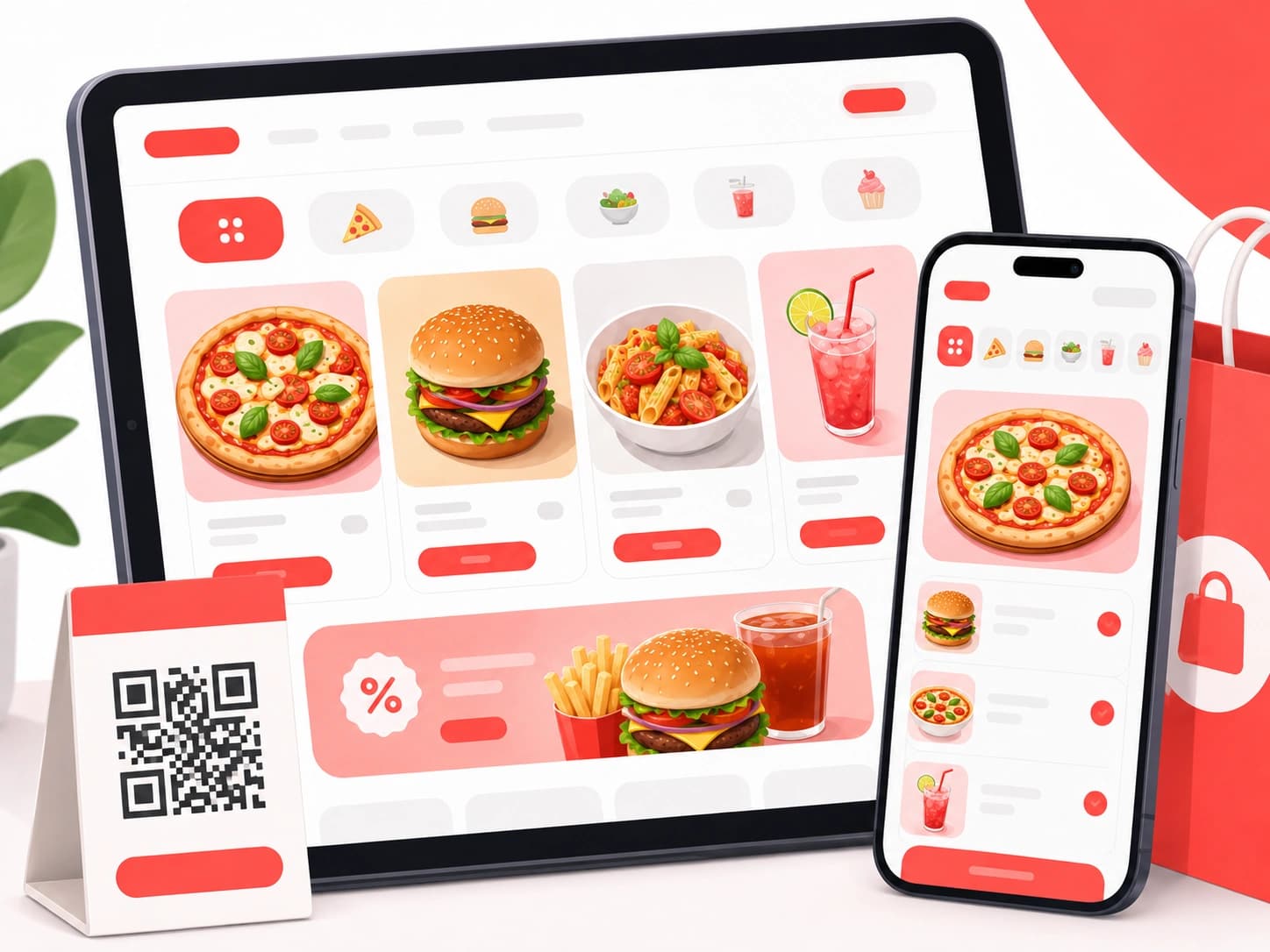
A digital menu is a live restaurant menu that can be updated online, while a printed menu is a fixed physical asset that must be redesigned and reprinted when details change.
The real comparison is not paper versus screen. It is operational flexibility, menu accuracy, and how quickly the restaurant can respond to price changes, sold-out items, and seasonal offers.
What is the true cost of printed menus?
The true cost of printed menus includes design, printing, staff time, delays, waste, and revenue lost when outdated items or prices create confusion.
Printed menus are predictable until the restaurant changes prices, photos, item availability, allergens, or seasonal offerings. Then the menu becomes a cost and accuracy problem.
What are the main advantages of a digital menu?
A digital menu is easier to update, easier to connect to ordering, and easier to personalize by daypart or availability.
Restaurants can mark items sold out, adjust modifiers, highlight high-margin items, and connect menu browsing to a direct order flow.
- Instant item updates
- Sold-out flags
- Allergen and dietary labels
- Menu photos
- Links to direct ordering
Should restaurants still keep printed menus?
Many restaurants should keep a small printed fallback while using the digital menu as the source of truth.
Printed menus remain useful for accessibility, brand experience, and guests who prefer physical menus. The digital menu should still be the easiest place to keep details current.
Frequently asked questions
Conclusion
Printed menus still have a place, but the live digital menu should be the operational source of truth for restaurants that change often.
Discussion
Comments
No comments yet.
Ask a question or add what worked in your restaurant.